If you teach, you know this feeling. You have a rich text in front of you. You have a lot of notes and insights you want to share with your students. You also don't know how you can get the class to connect with this great lesson you've prepared.
This past Sunday, while preparing my adult class to study Ephesians 2:11–22, we took a step back to Ephesians 2:10 and one of the most beautiful words in the New Testament. Paul writes that we are God's "workmanship." The Greek term is poiema — the word from which we get our English word poem. Paul is saying that your life is God's artwork. Not a rough draft. Not a spreadsheet. Not a list of deeds. A work of art, created with intention.
I wanted the class to actually see this point Paul was making. So we tried something a little different, and I believe it can help you in your class as well.
The Icebreaker
I asked everyone to pull out their phones, open ChatGPT, and use this prompt:
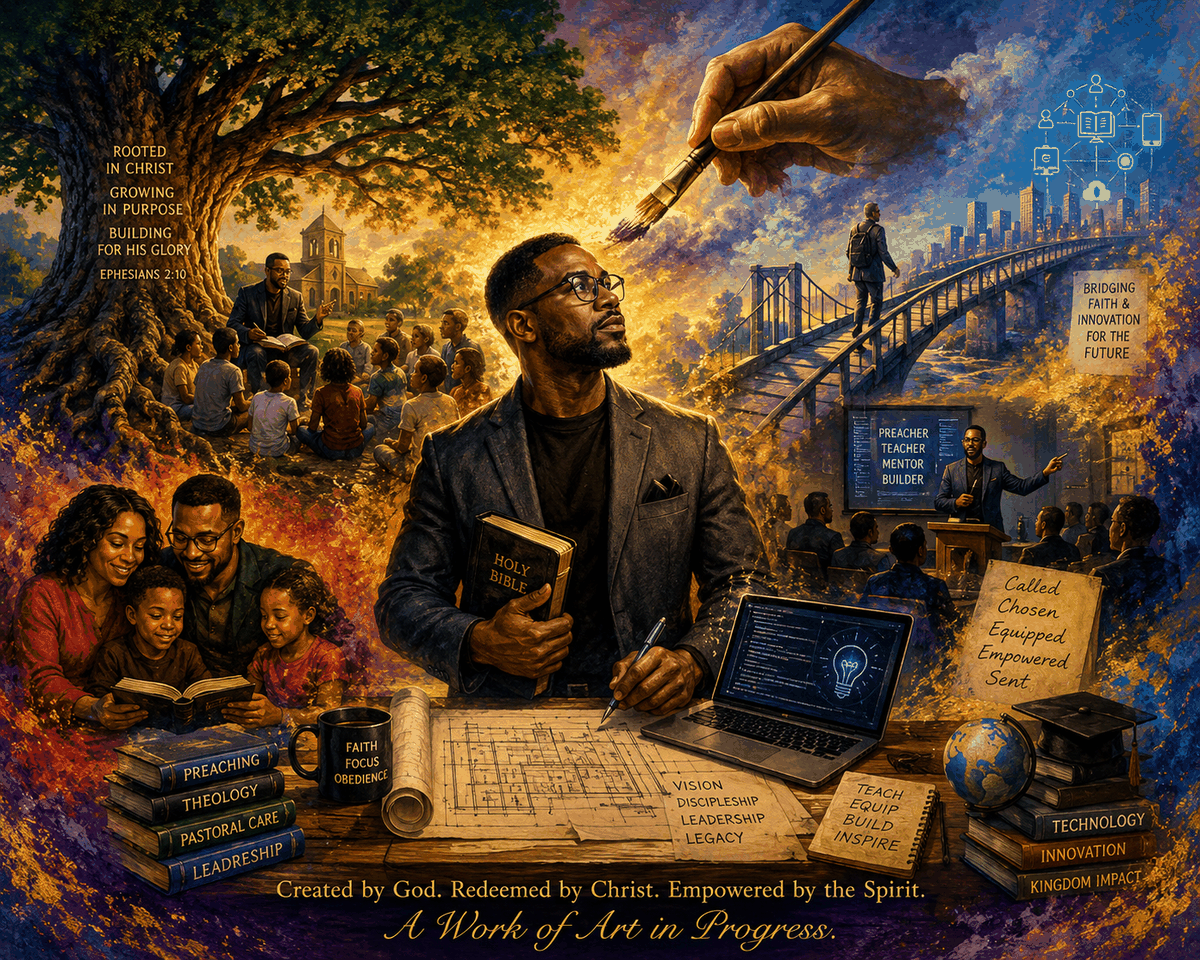
I am studying Ephesians 2:10 and I have been created by God as his artwork. Create an image that depicts my life as a work of art, and describe the image and its colors in 200 words or less.
Within a minute or two, everyone in the room was holding a short, vivid description of their life rendered as a painting, colors, symbols, composition and all.
Here's the description I received:
The image portrays your life as a vibrant work still being painted by God: deep blue and purple represent preparation, mystery, and calling; golden light symbolizes God's presence and purpose; green reflects spiritual growth and discipleship; and red-orange tones surround your family, expressing love, warmth, and legacy. At the center, you stand as a pastor, teacher, scholar, and builder — holding Scripture while surrounded by a church, classroom, technology, blueprints, and a bridge connecting faith with innovation — beneath the hand of the Master Artist, who is still shaping your life for kingdom impact.
Is that description authoritative? Of course not. But that's not the point. The point is what happened next.
What It Unlocked
The exercise got people thinking about their lives not in terms of a list of deeds, but in terms of the picture those deeds illustrate. That's exactly the shift Paul is making in Ephesians 2. Salvation is not a transaction we completed; it is a masterpiece God is composing. Paul says we are, "created in Christ Jesus for good works, which God prepared beforehand, that we should walk in them."
From there, discussion flowed naturally:
- Where does your AI-generated "portrait" ring true — and where does it flatter you?
- What colors would God actually use to describe this season of your life?
- Paul says the artwork was created for good works prepared beforehand. What is your life composed to do?
- How does seeing yourself as God's poem change the way you read the rest of Ephesians 2, where Paul describes a divided humanity being built together into one dwelling place for God?
Phones are usually the enemy of classroom attention, but in this case they became the doorway into the text.
A Word About the Tool
Let me be clear about the boundary here, because it matters. AI is not the authority over our lives. Scripture is.
The AI-generated description is a mirror, not a message. It reflects back what we tell it, dressed in imagery. Its value in the classroom is not revelation. It is simply conversation. It gives every student something concrete in their hands to compare against the vision Paul lays out in Ephesians. The discussion happens when we hold the machine's flattering portrait up against the inspired text and ask, "What does God actually say about who I am?"
Try It This Week
If you teach a Sunday School class, small group, or Bible study, here's the whole activity in one place:
- Read Ephesians 2:10 together. Introduce the word poiema — we are God's poem, His artwork.
- Share the prompt. Have students enter it into any AI chat tool on their phones: "I am studying Ephesians 2:10 and I have been created by God as his artwork. Create an image that depicts my life as a work of art, and describe the image and its colors in 200 words or less."
- Let a few volunteers read their results aloud. Expect laughter, surprise, and some deep discussion.
- Bridge to the text. Ask where the portraits align with the identity Paul describes. Then move into the passage you're teaching.
One prompt. Ten minutes. And a room full of people who just remembered that the Master Artist isn't finished with them yet.
This icebreaker comes from a real classroom. I used it with my own adult Bible study class while teaching through Ephesians. If you try it with your group, I'd love to hear how it goes.