Scripture Alone Not Scripture Only
For years, I believed that reading anything outside of the Bible was spiritually dangerous. I was very suspicious of self-help books, psychology, and anything that might come across as trying to have an equal voice as the word of God. To this day, I am leery of content that purports to be theology or sermonic but lacks careful biblical grounding. However, I have evolved in my thinking.
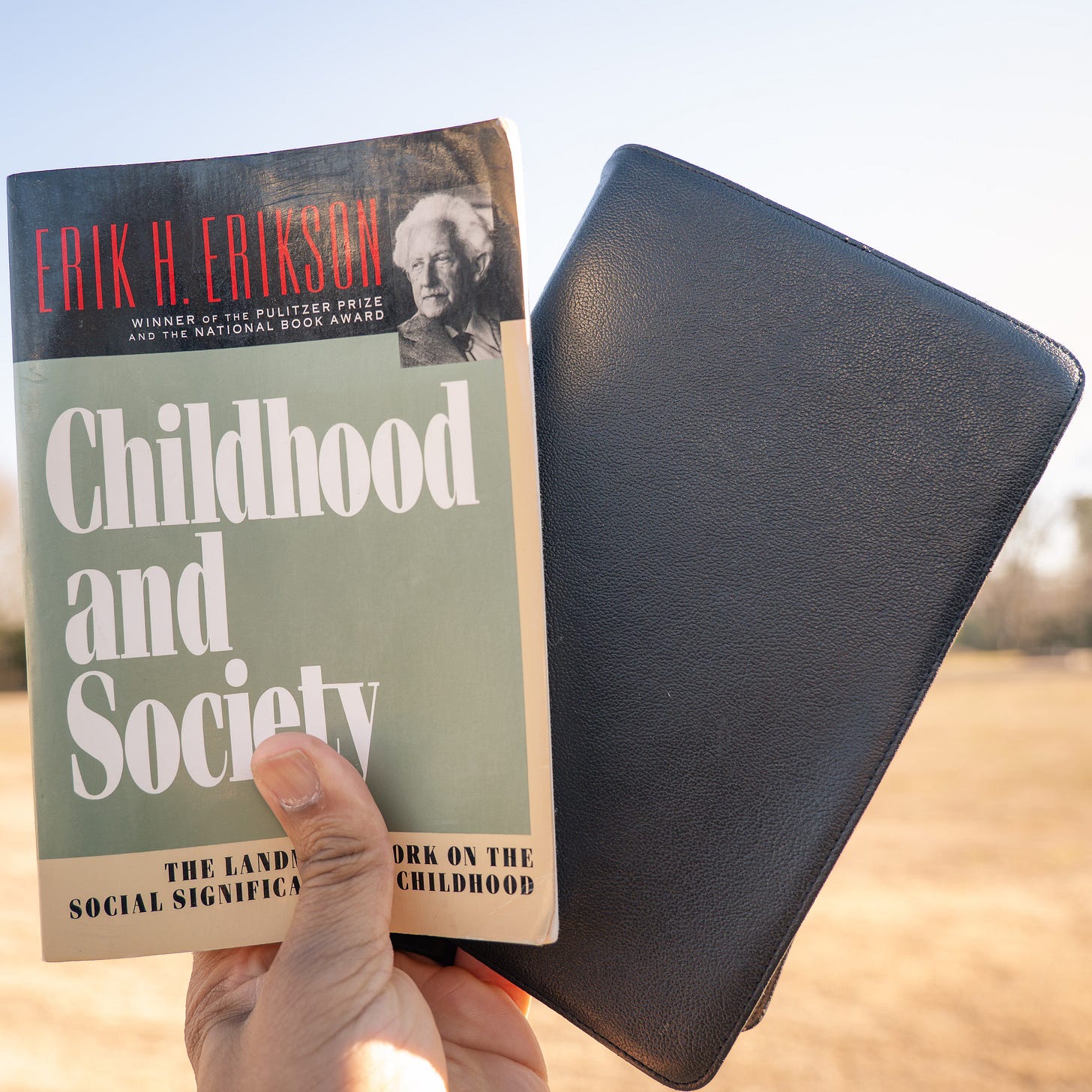
I've come to believe that faithfulness doesn't mean isolation. It means integration. We hold the Bible in one hand and the best books we can find in the other.
Integration > Isolation
This new posture wasn't formed overnight. The tension began when I was exposed to reformed theology and the five solas, particularly the idea of sola scriptura (scripture alone). My understanding at the time led me to believe I must guard against allowing my view of the world and the Christian life to be influenced by anything other than the Bible.
God Speaks Through His World Too
The evolution involved recognizing how voices and sources outside the Bible can help me understand what is in the Bible more clearly. It took some humility to acknowledge that even the best interpreters see things dimly. (1 Corinthians 13:12) The Bible is God's truth revealed to us. However, it is not the only means by which God reveals truth to us. In Romans, Paul tells us that creation reveals something about the Creator. (Romans 1:19-20 ESV)
Integration of the sciences does not suggest that scripture is insufficient. It suggests that our interpretations of scripture can be insufficient. Allowing findings from the social sciences to inform our anthropology should not negate our stance on the inerrancy of scripture; it should help us to correct errors in our interpretation of the sacred text.
We can learn something about God through the study of his creation. As an example, if we were to read a phrase like "the four corners of the earth" in Revelation 7:1, I might develop a view of the earth as being flat. Science disproves the view of the Earth as being flat. It helps us interpret the text as a symbol.
Likewise, social sciences are not a threat to our theology. Integrating the study of humans into our theology need not threaten biblical fidelity. In fact, embracing them might help us deepen our relationship with God and the humans around us.
What Has Changed In My Ministry
I have found that the more I responsibly read and consider voices from the disciplines of psychology, development, and learning, the more thoughtful I have become in my teaching, preaching, and curriculum design. Learning how humans developed has made me more sensitive to age-appropriate training. Realizing how context influences the way we learn has shaped my teaching. God is and always will be our north star, scripture the guiding light, but the sciences help us calculate our steps.
A Bible In One Hand. A Book In The Other.
Pastors, teachers, leaders, and mentors don't have to choose between biblical faithfulness and learning. We can open the Bible with reverence and a good book with curiosity. A Bible in one hand. A book in the other.
Nurture that desire to understand, love, and lead the people in your sphere of influence, all for the glory of God.